
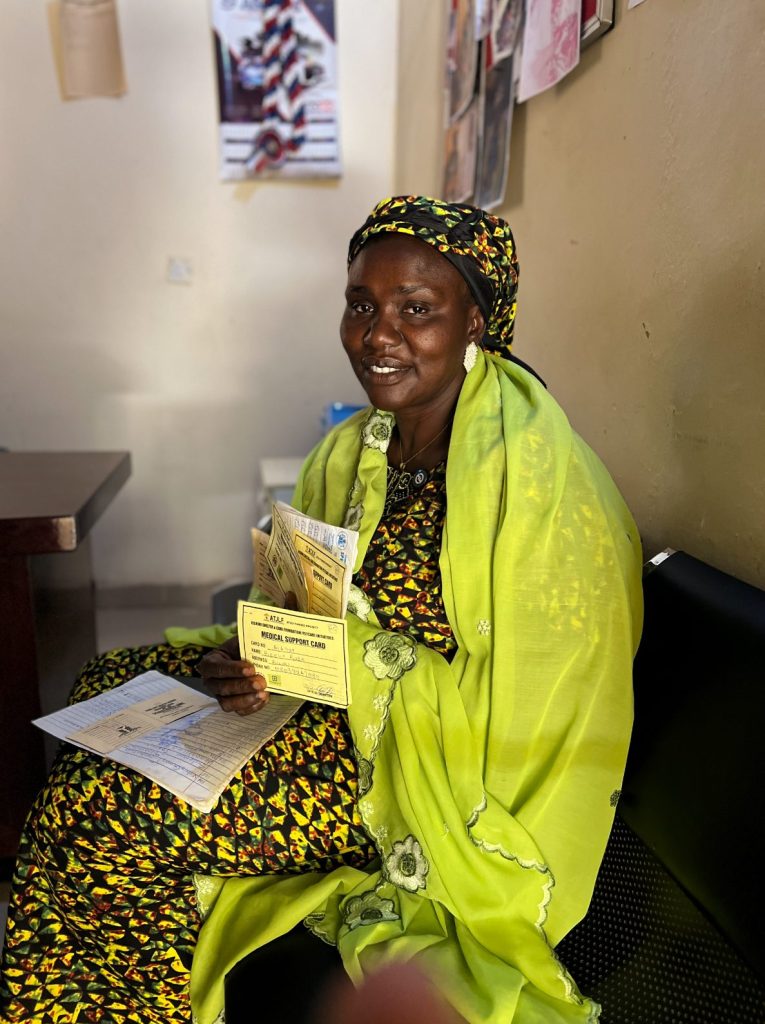
Saratu Joshua is called the “doctor of the mad” for a reason both tragic and inspiring, although she is not a medical doctor. In January 2015, she had happened to be in the wrong place at the wrong time when a suicide bomber detonated a bomb in Damaturu, North East Nigeria.
“They say whoever hears the explosion has survived it,” Saratu says.
She heard it. She was not killed by it. But what doesn’t kill you sometimes breaks your spirit and scatters your mind. It shook Saratu so violently that the trauma seeped into her consciousness and made her persistently restless. So restless that sleep evaded her every night, and when there was a sudden sound, no matter how faint, her body would begin to tremble.
On the day of the bomb blast, Saratu was walking on the road with a wheelbarrow, on her way to grind foodstuff. From a distance, she saw a man being chased by a military car and she quickly stepped aside. She did not know what was happening and before she could figure it out, the man parked his car a few meters ahead of her. Moments later, an explosion tore through the air.
The next thing she remembers is being dragged out of a gutter by a soldier who was warning that she left the site so she isn’t accused of being the suicide bomber. He carried her into an uncompleted building where she saw a severed human head in a cap. It was jarring and deeply frightening.
Saratu crawled away and entered a nearby house. It was empty. Everyone had fled. But she stayed there until a rescue team arrived and took her to the hospital, along with other survivors. Because she had no physical injuries, and was overwhelmed by the sight of those who were wounded and killed, she left. But the aftermath soon began to show in the insomnia and intense anxiety that took over her body.
Five years before the incident in February 2010, Saratu and her family had moved to Billiri, a town in Gombe, northeastern Nigeria. The Boko Haram insurgency had started to grow more violent then, with multiple suicide bombing attempts, raids and killings in hotspots like Borno and Yobe.
Nine men had just been killed in her area, and Saratu’s husband was becoming more afraid of the hunt on men. It was no longer safe for them to remain at home, so they made the difficult decision of leaving home and everything they knew as familiar behind.
In 2013, three years after moving to Billiri, Saratu returned to Damaturu. She had little to do in Billiri and wanted to go back to her tailoring business, where she had a shop and six apprentices under her.
From time to time, she travelled back to Billiri to visit her husband and children. It was an arrangement the family had agreed on, as the children could continue their schooling in Billiri. Her husband was able to continue his carpentry too.
“Schooling was becoming almost impossible in Damaturu, because the attacks often forced schools to shut down for weeks and months at a time. It was better for us that they had uninterrupted education,” says Saratu.
Life was bearable in Damaturu, until that fateful afternoon in January 2015, when the explosion changed her life in many ways: how she had to return to Billiri completely and forsake her business, how the incident planted trauma in her bones and flesh such that everyday tasks became strenuous, how her body could not find ample rest in sleep because her mind would not shut down, how her family took her from one traditional healer to another hoping they would “fix” her, how until this day, life has never been the same.
After about a year, Saratu decided she’d go to Damaturu to see a psychiatrist.
“When I saw the doctor he immediately knew what was wrong with me. He asked me what had scared or traumatised me and I told him. He told me not to worry, that my condition was treatable, and he would put me on medication. I was relieved,” Saratu recounts
Every month, she would go to Damaturu from Billiri to get her monthly prescription refill. Sometimes she would be lucky enough to get two months worth of medication so she doesn’t have to go back as frequently.
This was before the Kishimi Shelter and Care Foundation came, before their intervention made such a difference it changed her life for the better. Through it, Saratu got access to free medications and found purpose again.
The Problem
Saratu’s experience reflects the larger mental health crisis faced by Internally Displaced People (IDPs) in Nigeria. Years of conflict in the North East have left deep psychological wounds, especially among IDPs. For many, the trauma did not end when they fled their homes. It followed them into their daily lives and relationships.
Studies show that the scale of mental health needs is extremely high. Up to 75 per cent of IDPs affected by the Boko Haram insurgency experience significant psychological distress, with PTSD affecting as many as 75–94 per cent, and depression and anxiety affecting up to 60–98 per cent and 66–99 per cent respectively in some settings.
Behind these numbers are people who have witnessed violence, lost family members, or been forced to flee everything they know.
Despite this, mental health remains widely misunderstood. Symptoms are often seen as spiritual problems rather than medical conditions. Many people seek help outside the healthcare system, or not at all, due to stigma and fear of being labelled.
At the same time, access to care is limited. There are few trained professionals, especially in conflict-affected and rural areas, and services are often too far or too expensive.
So while the need is widespread and urgent, support remains out of reach for many, leaving thousands to live with untreated trauma.
This is the gap the Kishimi Shelter and Care Foundation filled. It is a non-governmental organisation working across health, education, and household economic strengthening, as well as consultancy.
The intervention
“Our vision is to see a society where vulnerable people, particularly children, young adults, and women, are provided with quality life experiences. We do this by partnering with relevant stakeholders who share a similar vision with us,” says Grace Samuel, the Executive Director of the Kishimi Shelter and Care Foundation.
Four years ago, Kishimi partnered with the Africa Transitional Justice Fund (ATJLF) to provide mental health support to displaced people in Gombe, a northeastern state that has seen relative safety amid the insecurity in the region.
The Africa Transitional Justice Legacy Fund (ATJLF) is a pan-African initiative that funds locally led projects focused on healing, justice, and community rebuilding in societies affected by conflict and human rights violations.
Kishimi’s programme, in partnership with ATJLF, named Provision of Palliative Care for Traumatised Survivors of Conflict in the North East, has run for four years, and supports the recovery of people like Saratu. It has covered multiple local government areas, including Kaltungo, Yemaltu Deba, Akko, Gombe, Funakaye and Billiri, providing psychosocial support, safe spaces, and medical care, including access to free medication.
“We noticed that the emotional aspect was not being properly addressed so we chose to focus on that and explore how we could address the emotional needs of internally displaced persons,” explains John Benedict, who is the Programme Manager for the project.
He noted that while initial government responses to displacement often addressed basic needs such as food and shelter, the emotional and psychological needs of affected individuals were largely neglected.
“We provide medical support for those with mental health conditions. We signed an MOU with the government hospital and pharmacy so that when they get their prescriptions. That medical support has been running and has reached about 120 people so far,” John added.
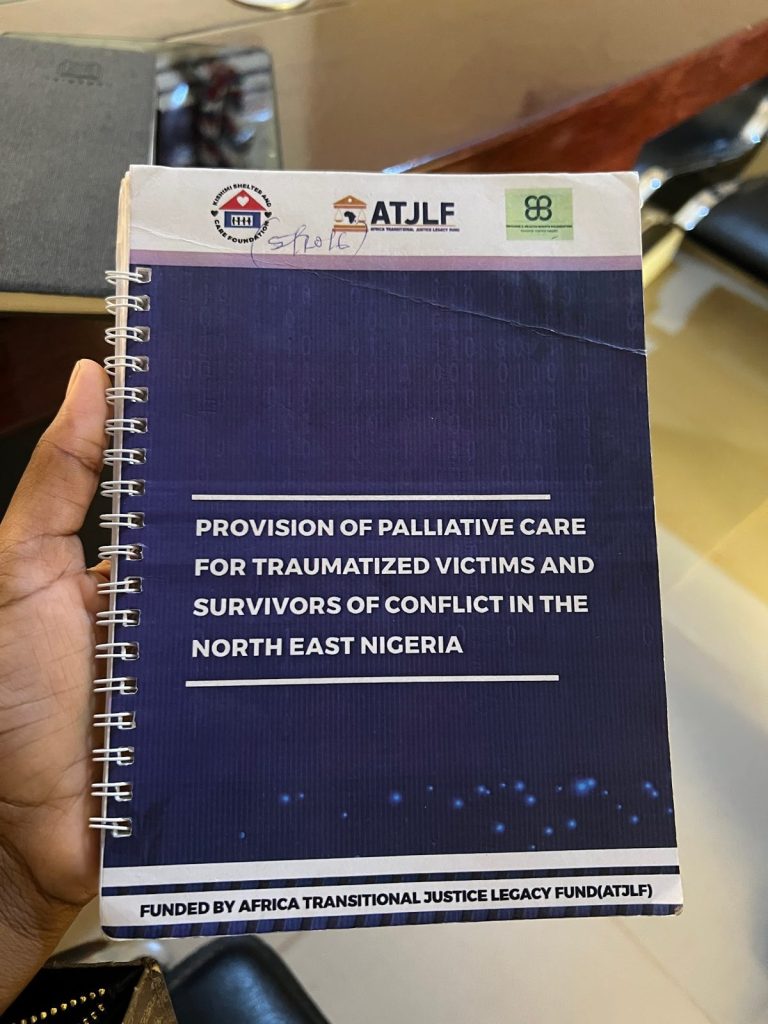
The programme began with training 25 stakeholders and community-based lay counsellors to identify, respond to, and refer to trauma cases. Awareness campaigns, particularly through radio programmes, were also used to educate the public on trauma and mental health.
It also established 2–4 monthly safe spaces, each supporting 25 beneficiaries, where participants receive structured psychosocial support in group settings. More severe cases are referred for medical care through partnerships with hospitals and pharmaceutical providers.
One of such partnerships is with Asher Zakayo, a psychiatric nurse in the Gombe Specialist Hospital, who specifically attends to the beneficiaries of Kishimi.
He has worked closely with traumatised individuals, particularly internally displaced persons, addressing conditions such as depression and post-traumatic stress disorder, which he identifies as the most prevalent among this population.
“There was a young lady who came in looking very, emaciated, unkempt, and she looked almost fifty when she was actually much younger. After just a few weeks of treatment and follow-up, she returned, and I couldn’t even recognise her. She was smiling, stable, and already making plans to start a business. That kind of transformation is something I cannot forget,” Zakayo narrates.
While the organisation has made significant progress, it faces several hurdles. Limited funding and tight project timelines mean only a portion of those in need can be supported. High community expectations and the challenge of fairly addressing both IDPs’ and host communities’ needs also add to the complexity.
Additionally, he highlighted that there is a major gap in mental health resources, with very few specialists in Gombe.
Ripple effect
Haruna Adamu Bello is one of the stakeholders tasked with the responsibility of mental health awareness in Billiri Local Government Area (LGA).
“They made us go around to raise awareness by visiting major offices and traditional palaces so that our work would be known. We also run a Village Savings and Loan programme. We started our own, and everyone contributes five thousand naira every month,” Haruna explains.
Haruna is a father of 4, and originally from Billiri. Inspired by Kishimi’s work, he co-founded Atmayo Community Development Initiative, with the aim of empowering youth and women through education, skills development and entrepreneurship.
“A friend told me about Kishimi, and how they are working on awareness and support for those affected by Boko Haram. The more I got involved with their work, the more I wanted to do something like that too. So I told them and they advised me on how to go about starting my own initiative,” says, with a proud smile on his face.
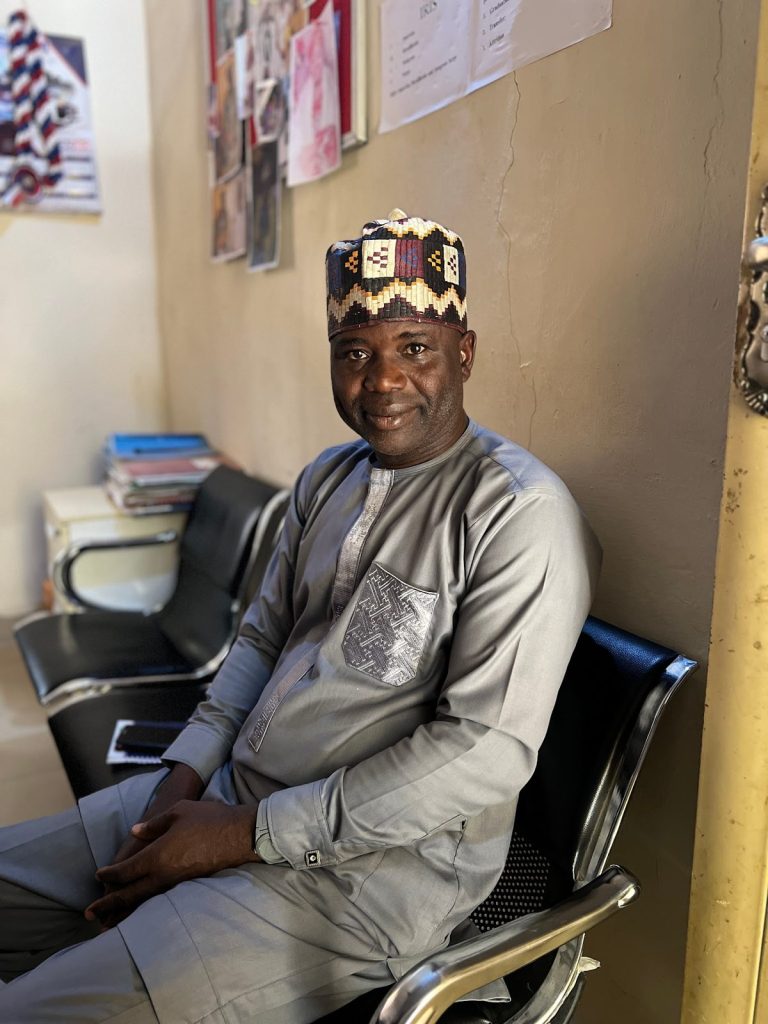
Atmayo is now a registered organisation with the Corporate Affairs Commission, with a team of young people who meet monthly at their office, and carry out various community outreach projects.
Despite operating without grant support, Haruna emphasises that the organisation manages its affairs independently, setting an example for other grassroots initiatives.
The influence of Kishimi’s ATJLF-supported project is evident in this local ripple effect: the knowledge, frameworks, and inspiration provided by Kishimi have catalysed the creation of sustainable, community-led structures that continue to provide necessary support to the society.
It is this effect that also inspired Saratu to become passionate about helping other people with mental health illnesses, whether displaced or members of the host community.
When she sees someone struggling with a mental health condition, she does not look away. She guides them. Sometimes she gathers transport money and takes them herself to the hospital.
Today, seven people are receiving treatment through her support. Two more have already recovered. Her work extends beyond referrals. In the safe spaces created through the programme, she gathers with other women, many of them displaced like her. Together, they make soap and mentholated ointments, run savings groups, and loan small amounts of money to one another to start businesses.
Saratu also teaches tailoring on Saturdays to young women who are interested in learning the trade. She speaks to women about forced marriage, about caring for their children well, about recognising abuse and reporting it.
“There is a teenage girl who was mentally ill and had lost control of herself completely. I took her to the hospital and cared for her through everything, even when she soiled herself in distress. I did not leave, I stayed.”
Today, the girl is well. When she sees Saratu, she runs to her like a mother. Saratu says she loves to be of help to other because she know what it feels like to be helpless, but also what it feels like for someone to care about you, to look out for you, and help you in the way that you need. She knows what it feels like to be rid of debilitating consequences of a mental health illness and regain control of your life.
But this work comes with challenges too, Saratu says. Many believe only traditional or spiritual routes can heal mental illnesses, so they do not get medical help. Some accuse her of favouritism, of choosing who to help.
She wishes for more people to receive the kind of support she received. For more communities to be reached. For organisations like Kishimi to have the funding to expand their work. Because she knows there are many others like her, women who are waiting for someone to hold their hand.
Before the explosion, Saratu was healthy. She had plans, a business, ambitions. The blast changed everything. But it did not end her story, it opened a new chapter. And in this one, she is helping others find their way back from the same darkness she once walked through. And for that, they call her the “doctor of the mad.”